If you searched for sci fi tv series man vs gods, you probably want stories where ordinary humans push back against powers that look unbeatable. The two short dramas here take different routes: one treats "gods" as engineered systems controlling reality, while the other turns divine rule into a public battle for humanity's survival.
How Do Short Dramas Portray Humans vs Gods?
Short dramas usually make this trope work by cutting straight to the pressure point: who controls human life, and what happens when one person refuses to accept it? Instead of slow world-building, they often open with a broken system, a cruel divine order, or a hidden power that has already shaped the world before the hero understands it.
The first thing to check as a viewer is the type of "god" the story uses. If the enemy is a program, simulation, alien civilization, or engineered ruler, expect more mystery and system-breaking. If the enemy is a mythological god, expect direct conflict, symbolic battles, and bigger emotional gestures.
- Choose engineered gods if you like reality glitches, hidden rules, and rebellion through knowledge.
- Choose mythological gods if you want visible stakes, arena battles, and heroes standing against divine pride.
- Skip short-form versions if you need slow lore, long character arcs, or detailed mythology before the conflict begins.
Humans Rebel Against Engineered Gods
Engineered-god stories work best when the "divine" power feels built rather than sacred. A ruling program, higher civilization, or artificial system can control behavior so completely that it becomes godlike in practice, even if it has no spiritual authority.
This is the better lane for viewers who enjoy titles like Stargate or parts of Battlestar Galactica, where false divinity often comes from advanced technology, manipulation, or belief systems that benefit the rulers. The useful question is not "is this really a god?" but "can humans find the weakness in the system?"
Mortals Fight Mythological Gods for Survival
Mythological versions are more direct. The gods are visible, the threat is personal, and human survival is usually tested through combat, sacrifice, or public humiliation.
This style is a good fit for a quick-watch mood: you do not need to understand a complex sci-fi framework before the stakes make sense. If you want a weekend binge with clear heroes and divine enemies, this path is easier to enter than a dense space-opera story. If you prefer ambiguity and technical mystery, it may feel too straightforward.
My Mission Is to Free Human Beings!
My Mission Is to Free Human Beings! is the stronger pick if you want the "gods" to feel like a control system rather than a pantheon. Ian's world appears to be shaped by hidden programs and higher powers that decide what humans can know, choose, and resist.
The drama's appeal is not only that Ian fights back. It is that he seems to understand something other people cannot see yet. That makes the story more about awakening than revenge: one person notices the trap, then has to decide whether he can break it open for everyone else.
Ian Can Dismantle Reality's Rules
Ian's advantage is that he can interfere with the rules behind the world. That matters because a system-based enemy cannot always be beaten by strength; it has to be exposed, disrupted, or made to fail at the point where it believes it is untouchable.
For a viewer who likes puzzle-driven sci-fi, this is the key hook. The tension comes from watching Ian test what is fixed and what can be rewritten.
A Higher Civilization Harvests Humanity
The higher civilization angle gives the story a sharper edge: humans are not simply being ruled, they are being used. That shifts the conflict from "defeat the villain" to "stop a whole structure of exploitation."
- Best viewer match: someone who likes hidden rulers, resource extraction, and false divine authority.
- Main warning: do not expect slow political detail; short dramas usually make the moral conflict clear fast.
- Practical watch test: if the first few episodes make you curious about who designed the system, keep going.
Ian Challenges the Programs Ruling His World
The most interesting part of Ian's fight is that the enemy is not just one powerful figure. Programs can repair damage, redirect behavior, and make people accept limits as normal. That kind of villain feels modern because it turns control into a background condition instead of a throne room speech.
If you are deciding between this and a mythic battle drama, ask what you want from the conflict. Pick Ian's story for coded realities, hidden manipulation, and a hero who wins by understanding the rules. Pick something more mythological if you want open confrontation and cleaner emotional release.
Arena of Gods and Mortals
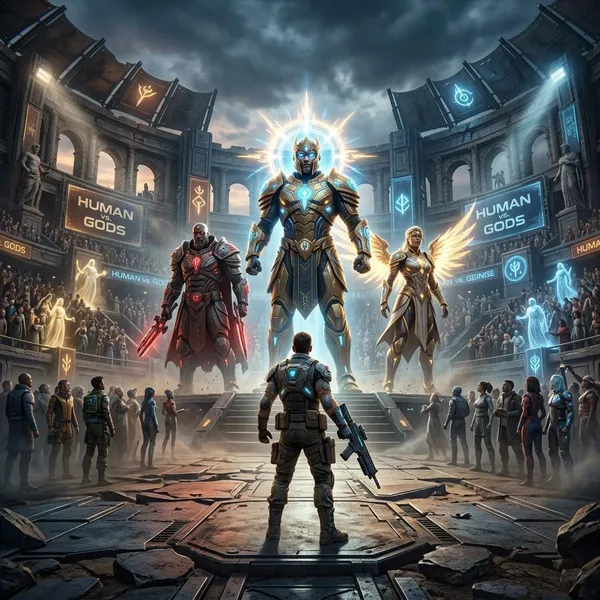
Arena of Gods and Mortals takes the opposite route. Instead of hiding divine power inside systems, it puts gods and humans into a visible contest where defeat means humanity loses more than a battle; it risks losing its place in history.
This is the better choice for viewers who want a dramatic, fantasy-forward version of the humans-versus-gods idea. The pleasure is not in uncovering a secret machine. It is in watching mortals step into an impossible arena and refuse to be treated as disposable.
| Viewer mood | Better short drama to start with |
|---|---|
| You want hidden systems, reality control, and a sci-fi hook | My Mission Is to Free Human Beings! |
| You want divine combat, mythic heroes, and public stakes | Arena of Gods and Mortals |
| You only have time for short viewing sessions | Either works, but check the platform unlock model first |
Humanity Faces Defeat in a Divine Tournament
The tournament setup is useful because it makes an unfair cosmic struggle easy to follow. Every round becomes a judgment on humanity: are mortals weak by nature, or have the gods simply controlled the story for too long?
This format works especially well for short episodes. A single fight can deliver a clear turning point, while the larger tournament keeps the pressure high without needing a long setup.
Silas Summons Forgotten Heroes
Silas matters because he does more than recruit fighters. He brings back human memory. In a story where gods dominate the record of the past, forgotten heroes become proof that humanity was never as powerless as the divine order claimed.
He Battles Odin to Restore Humanity's History
A battle with Odin raises the conflict above simple survival. It becomes a fight over authorship: who gets to decide what humanity was, what it is worth, and whether its history can be erased by divine command?
This is where the drama is likely to work best for viewers who enjoy myth but still want a modern emotional core. The surface is gods and champions; the real issue is whether people can reclaim a story that was taken from them.
Where to Watch These Humans vs Gods Short Dramas
These titles are usually watched on short-drama platforms rather than traditional TV streaming services. That changes the viewing experience: episodes are brief, pacing is fast, and access may depend on ads, coins, subscriptions, or regional availability.
Before you start, check three things in the official app listing: whether the title is available in your region, whether English subtitles or dubbing are offered, and how many episodes are free before the unlock model begins. That quick check matters more than older watch recommendations because short-drama platforms can change access rules often.
My Mission Is to Free Human Beings! on ReelShort
My Mission Is to Free Human Beings! is listed for ReelShort, a platform built around short serialized episodes. It suits a viewer who wants to sample a high-concept sci-fi premise during short breaks rather than commit to hour-long episodes.
Check the ReelShort listing for current language options, free opening episodes, and any coin or ad-based unlocks. If you mainly watch on mobile, this format will feel natural; if you prefer long uninterrupted sessions, the cliffhanger rhythm may feel more fragmented.
Arena of Gods and Mortals on NetShort
Arena of Gods and Mortals is listed for NetShort. The platform's short-episode style fits tournament storytelling because each installment can focus on a challenge, a reveal, or a shift in humanity's chances.
This is the easier starting point if you want mythic action without a long fantasy commitment. Still, confirm the episode count and unlock terms in your region before settling in, especially if you plan to watch beyond the free preview episodes.
Conclusion
Pick My Mission Is to Free Human Beings! if you want humans fighting a hidden system that treats reality like code, and choose Arena of Gods and Mortals if you want gods, champions, and a public fight over humanity's future. Both deliver the same core thrill, but the better choice depends on whether you prefer a mystery of control or a mythic showdown.