Before anyone speaks, a ruined city can show you what the characters have already lost. In short dramas, AI-assisted settings can do that kind of storytelling in seconds. A futuristic Seoul can hint at who holds power, and a game-like fantasy world can show what happens when someone breaks the rules. The best examples make the world feel bigger while giving you a clear sense of what's at stake.
What Is an AI-Generated World in a Short Drama?
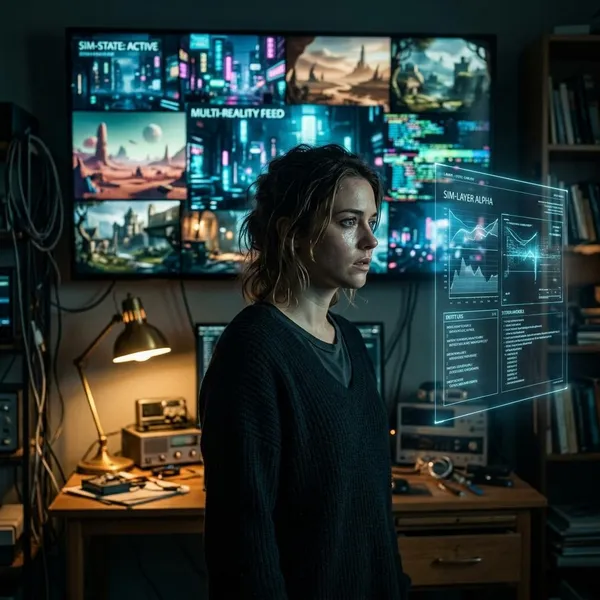
An AI-generated world in a short drama is a fictional setting built with help from AI tools, then shaped by writers, editors, designers, and producers. The setting might be a collapsed city, a glowing fantasy kingdom, a future version of a real place, or a game-style world with levels and powers.
The first thing to check is whether the setting does real story work. A good AI-made world tells you what kind of danger, romance, or power shift is happening before the characters explain it. A weaker one only looks expensive for a few seconds, then stops mattering.
Fictional Settings Built With AI
AI tools can help short-drama teams create backgrounds, mood images, futuristic skylines, destroyed streets, fantasy interiors, and other visual pieces much faster than traditional set building. That speed matters because vertical dramas often need a strong visual hook right away.
- For a quick sampler: judge the first few scenes by mood and clarity, not perfect realism.
- For a full watch: check whether the same world still feels stable after several episodes.
- For paid unlocks: make sure the setting affects the plot before spending coins or passes.
Digital Characters Shaped by Human Creators
Digital-looking characters are still shaped by human choices. AI may help with appearance, styling, backgrounds, or visual continuity, but the character's desire, conflict, relationship role, and emotional timing come from the creative team.
This matters most in short episodes. If a heroine looks different every few scenes, or a rival's expression and style keep shifting for no reason, the story becomes harder to trust. The best AI-assisted dramas keep the characters instantly recognizable so viewers can focus on the betrayal, reunion, revenge, or romance instead of the production method.
AI Short Dramas With Worlds to Explore
These titles are useful examples because each one uses its world differently. One leans into near-future city tension, one uses apocalypse imagery to raise emotional stakes, and one uses game logic for fast progression. If you only have time to try one, choose based on the kind of world you enjoy, not just the AI angle.
Seoul: 2053
Seoul: 2053 uses a future version of Seoul as its main hook. The appeal is the gap between a recognizable real city and a more controlled, damaged, or technologically altered version of it. That kind of setting works well for viewers who like sci-fi tension, surveillance themes, social pressure, or urban mystery.
Miss You After the Apocalypse
Miss You After the Apocalypse pairs a broken-world setting with an emotional hook. That combination is easy to understand quickly: the world has collapsed, and someone still wants connection, reunion, or closure.
This is a better fit if you prefer romance or survival drama over pure sci-fi design. The key check is whether the ruined world keeps pressure on the characters. Empty streets, scarce shelter, and unsafe travel should change how people behave; if the apocalypse becomes only background decoration, the drama loses force.
Level One Loser Maxxx Level Lover
Level One Loser Maxxx Level Lover fits the game-fantasy side of AI-assisted short drama. Its world is built around levels, status, growth, and visible power differences, so it does not need to look realistic to be fun.
- Watch for clear rules: levels and abilities should be easy to understand.
- Expect bold visuals: arenas, status effects, and fantasy spaces can look highly stylized.
- Stop if the system becomes random: power shifts should feel earned, not invented for each cliffhanger.
What Makes an AI Drama World Feel Believable?
Believability in an AI drama world is mostly about coherence. The world does not have to look real, but it should look like the same place, follow the same logic, and support the same emotional stakes. Start with three checks: character consistency, clear scene connection, and stable world rules.
Characters Who Look Consistent
Character consistency is the fastest quality test. Faces, age, styling, costumes, and body language should not drift so much that you wonder whether you are watching the same person. Small changes are normal; unexplained identity shifts break immersion quickly.
Scenes That Connect Clearly
A short drama does not need a detailed map, but it does need enough visual logic to make movement feel understandable. If the story jumps from a subway ruin to a rooftop hideout to a command room, repeated landmarks, weather, lighting, or design style can make those places feel connected.
This is where a casual viewer and a committed viewer may judge differently. If you are only watching clips, strong single images may be enough. If you plan to watch the whole series, disconnected scenes become tiring because the world never settles into a place you can believe in.
World Rules That Stay Consistent
World rules are the difference between a stylish setting and a usable story world. A future city needs stable technology logic, an apocalypse needs stable danger logic, and a game-fantasy drama needs stable power logic.
- Acceptable: a strange rule that is introduced clearly and used again.
- Not recommended: a rule that changes only because the episode needs a cliffhanger.
- Best sign: twists feel like consequences of the world, not excuses to restart it.
Where to Watch These AI Short Dramas
These dramas are more likely to appear on mobile-first short drama apps than on traditional streaming platforms. Before you commit to a title, check three practical things: whether it is available in your region, whether English subtitles or dubbing are offered, and how many episodes are free before paid unlocks begin.
Seoul: 2053 on Vigloo
Look for Seoul: 2053 on Vigloo. Use the exact title first, then check whether your app region shows an English-subtitled or localized version.
If you are deciding whether to continue after the opening episodes, focus on the city design. A strong future-Seoul drama should make the setting feel recognizable enough to ground the story and altered enough to justify the sci-fi premise.
Miss You After the Apocalypse on DramaBox
Miss You After the Apocalypse is associated with DramaBox, where short emotional serials and cliffhanger-heavy episodes fit the platform style. Expect brief episodes and a watch pattern built around quick reveals.
Before unlocking later episodes, check whether the apocalypse setting keeps shaping the romance or survival choices. If the danger disappears whenever the plot needs a softer scene, the world may not hold up for a full watch.
Level One Loser Maxxx Level Lover on DramaBox
You can also search for Level One Loser Maxxx Level Lover on DramaBox. If the title appears under a slightly different localized name, the thumbnail and synopsis may be more reliable than the wording alone.
This is the one to try if you like fast status changes, fantasy power systems, and exaggerated romantic reversal. Just make sure the level system stays readable; once the rules stop making sense, the short-episode momentum usually becomes less satisfying.
Conclusion
AI-generated worlds are worth paying attention to when they make a short drama clearer, sharper, or more emotionally urgent. Start with the world's consistency before judging the visual spectacle: if the characters stay recognizable, the scenes connect, and the rules hold, the fake world can feel convincing enough to carry the story.